Menu
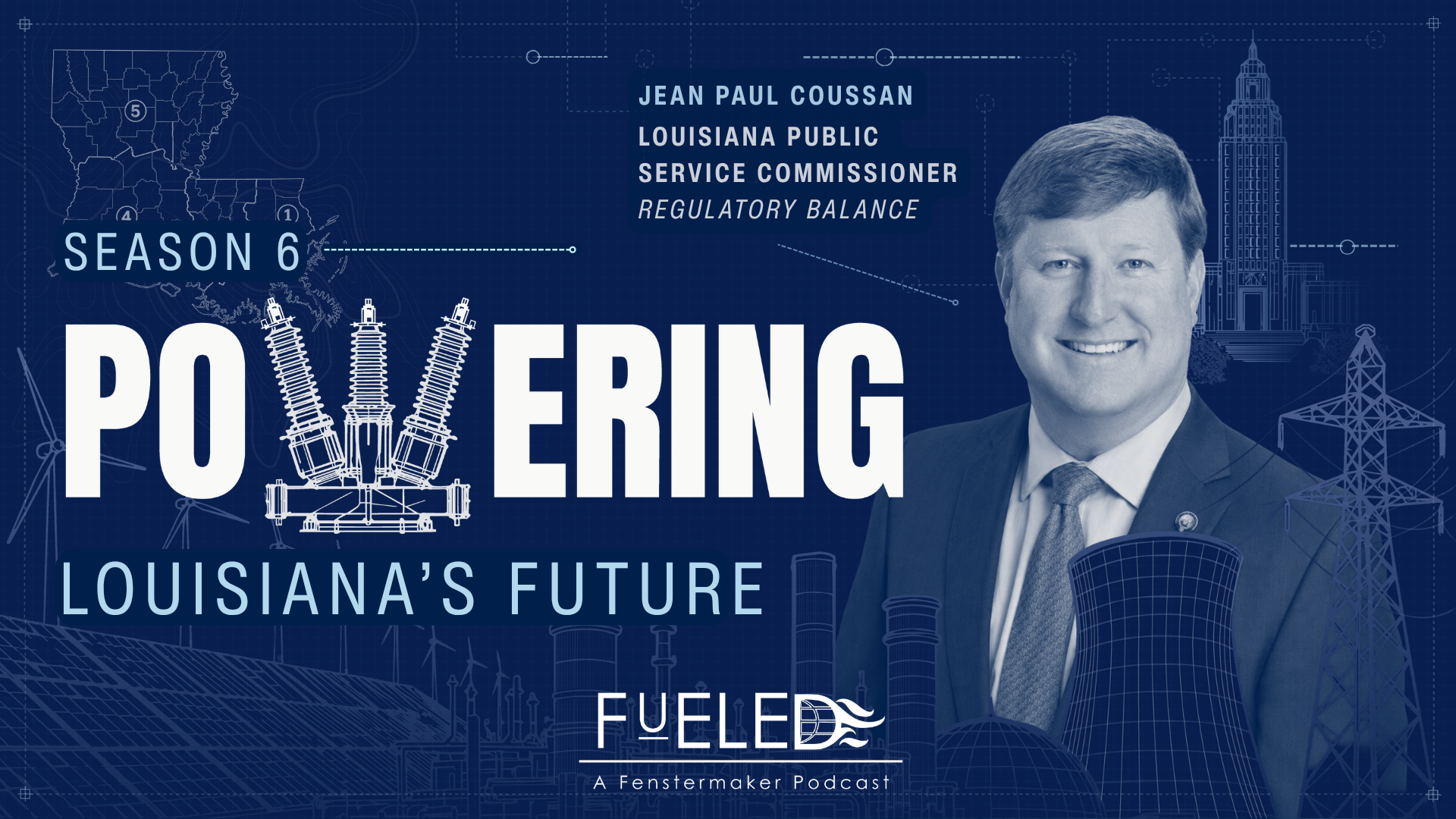
Episode 6 – Powering Louisiana’s Future

The Public-Interest Test: Jean-Paul Coussan on Governing Growth, Risk, and Reliability

Louisiana Public Service Commissioner Jean-Paul Coussan joins FUELED to discuss utility regulation, ratepayer protection, data centers, large-load growth, grid reliability, generation planning, and Louisiana’s power future.

Share on:

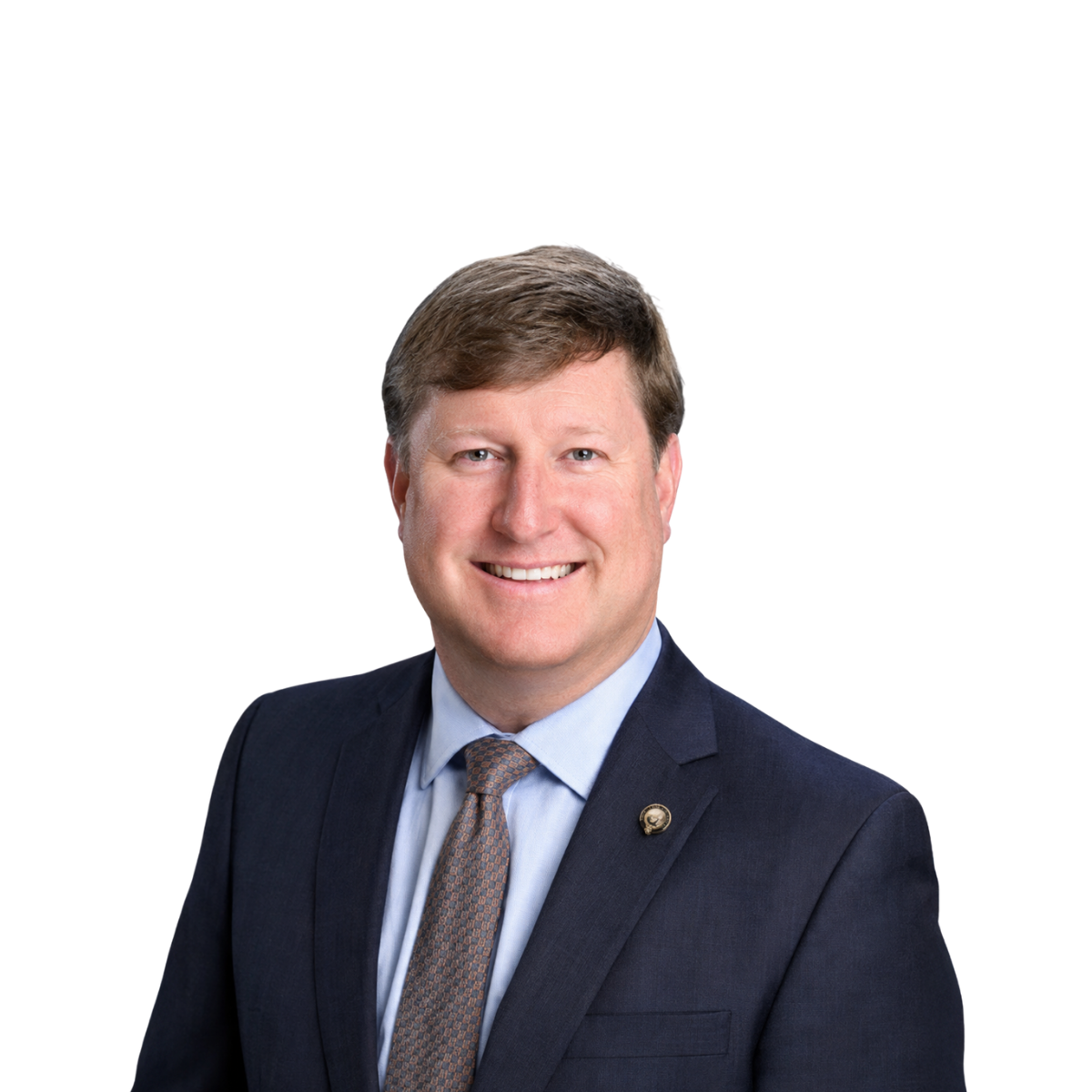
Jean-Paul Coussan

Episode Summary

In Episode 6 of FUELED Season 6, Kathryn Fenstermaker sits down with Jean-Paul Coussan, Vice Chairman of the Louisiana Public Service Commission and Commissioner for District 2, to discuss how the Commission approaches some of Louisiana’s most consequential energy decisions.

Coussan begins by explaining the Commission’s broad constitutional authority to regulate utilities and protect the public interest. He also describes the personal side of that responsibility: his district office handles roughly 1,500 constituent complaints each year involving outages, billing questions, and utility service.

That connection to the public shapes Coussan’s approach to policy. Reflecting on the thousands of oil and gas jobs Acadiana once lost, he explains why “jobs, jobs and jobs” remain his priority—and why economic growth should create opportunities for people to remain in Louisiana, raise families, and build wealth in their communities.

The conversation turns to Louisiana’s rapidly rising electricity demand, particularly from major industrial developments and data centers. Coussan explains how the Commission evaluates whether new power infrastructure is necessary while guarding against overbuilding, stranded assets, and costs being passed to existing customers.

One of the episode’s central themes is growth without cost shifting. Coussan argues that large-load customers should carry the costs and risks created by their projects while also producing measurable benefits for the broader system. Using Meta’s Richland Parish development as an example, he discusses customer guarantees, infrastructure contributions, minimum payments, and other protections intended to benefit surrounding communities and the electric grid.

Coussan also explains the “Lightning Amendment,” an accelerated review process designed to help the Commission respond to major economic-development opportunities without lowering its standards. The goal is to move with urgency without surrendering scrutiny.

The discussion also explores long-term energy planning, Louisiana’s “all-of-the-above” approach to generation, and the Commission’s continuing oversight of approved utility investments.

Looking ahead, Coussan defines success as a Louisiana growing in population and opportunity while maintaining nationally competitive electricity rates. At its heart, the episode is about regulation as stewardship: supporting growth without abandoning scrutiny or shifting its risks to the public. Coussan closes by comparing Louisiana’s future to planting oak trees whose full impact may not be seen for decades—a reminder that today’s decisions will shape the state for generations.
“We are derived from the people, and so we answer to the people.”

"We’re not lowering any standards. We’re not surrendering scrutiny”

Meet the Leader Behind the Vision

Jean-Paul Coussan serves as Vice Chairman of the Louisiana Public Service Commission and represents District 2, a geographically diverse district extending from the Lafayette area through portions of south and southeast Louisiana and north toward East Feliciana Parish.


Coussan joined the Commission in January 2025 following service in both chambers of the Louisiana Legislature. An attorney by profession, he brings a legal and real-estate perspective to utility regulation, including an understanding of property rights, servitudes, transmission and distribution infrastructure, and the extensive record that underlies major regulatory decisions.


His approach to public service has also been shaped by the economic history of Acadiana. Coussan recalls entering elected office at a time when thousands of oil and gas jobs had disappeared and families were searching for work, health coverage, and reasons to remain in Louisiana. That experience continues to inform his focus on growth and employment while serving in a role equally charged with protecting customers from unnecessary cost and risk.


At the Public Service Commission, that balance places Coussan at the intersection of some of Louisiana’s defining questions: how much power the state will need, which resources should provide it, how quickly infrastructure should be approved, who should pay for extraordinary new demand, and how accountability should continue long after a project is built.

“We need to be in a growth mentality.”

“We need environmental stewardship, financial stewardship, political stewardship.”

The Public-Interest Test: Jean-Paul Coussan on Regulation, Large-Load Growth, and Louisiana’s Power Future

In this episode of FUELED, Louisiana Public Service Commissioner Jean-Paul Coussan takes listeners inside the regulatory system governing major power decisions in Louisiana. From constituent complaints and public dockets to generation approvals, integrated resource planning, prudency reviews, and long-term utility oversight, Coussan explains the layers of scrutiny behind a Commission vote. The conversation also confronts the central challenge created by historic industrial and data-center growth: how Louisiana can build enough power quickly enough to compete without leaving existing customers responsible for the extraordinary costs and risks created by new demand. Coussan discusses ratepayer protections, large-load requirements, accelerated review, generation planning, system benefits, natural gas, solar, nuclear, and the continuing accountability required after major infrastructure is approved.

“We’re protecting the ratepayer from costs that are supposed to be borne completely by the new data centers.”

“We have the people, we have the workforce, we have the land.”

Episode Highlights

  • An elected regulatory body: Louisiana is one of the few states whose public service commissioners are elected, with constitutional authority to regulate and enforce matters involving public utilities.
  • Constituent service in action: Coussan explains how his District 2 staff handles roughly 1,500 complaints annually, helping residents resolve billing, outage, electric, gas, water, and sewage-service issues.
  • What happens before a Commission vote: Formal dockets, stakeholder filings, technical conferences, testimony, public participation, and administrative proceedings create the record behind major regulatory decisions.
  • Reliability, affordability, and prudent investment: Coussan discusses balancing dependable service with customer costs, from strengthening the grid before storms to proving that new generation is necessary and financially prudent.
  • Preparing for extraordinary electricity demand: Data centers and advanced manufacturing are creating loads far beyond ordinary growth, requiring Louisiana to rethink how generation and transmission infrastructure are planned.
  • Protecting existing ratepayers: Coussan argues that extraordinary new customers should bear the costs they create through infrastructure payments, minimum bills, financial guarantees, and other commitments that protect residential and industrial customers.
  • Lessons from the Meta project: The safeguards established for Meta’s Richland Parish data center are influencing how Louisiana evaluates future large-load customers and distinguishes customer-specific costs from broader grid benefits.
  • Faster review without lower standards: Coussan’s proposed “Lightning Amendment” is intended to accelerate regulatory decisions while preserving technical analysis, public participation, and accountability.
  • Planning an all-of-the-above energy future: Natural gas, nuclear, solar, existing generation sites, fuel availability, construction timelines, and supply chains all factor into Louisiana’s long-term resource decisions.
  • Regulation as stewardship: Coussan defines success as population and economic growth supported by competitive rates, responsible investment, public trust, and decisions that create opportunities for future generations.

“I actually do all three as a public service commissioner. We have authority to regulate, enforce, and adjudicate.”

“What fuels me is a vision for the future.”

More from FUELED

Conversations across seasons—on infrastructure, leadership, and public impact.

Established in 1950, C. H. Fenstermaker & Associates, L.L.C. is a highly diversified, multi-disciplinary consulting firm. With a commitment to help our clients succeed, we specialize in surveying and mapping, engineering and environmental consulting.

Click here for complete information about the licensing boards governing our Survey and Engineering professionals.

©2026 C. H. Fenstermaker & Associates, L.L.C.. All Rights Reserved.
Privacy PolicyTerms.