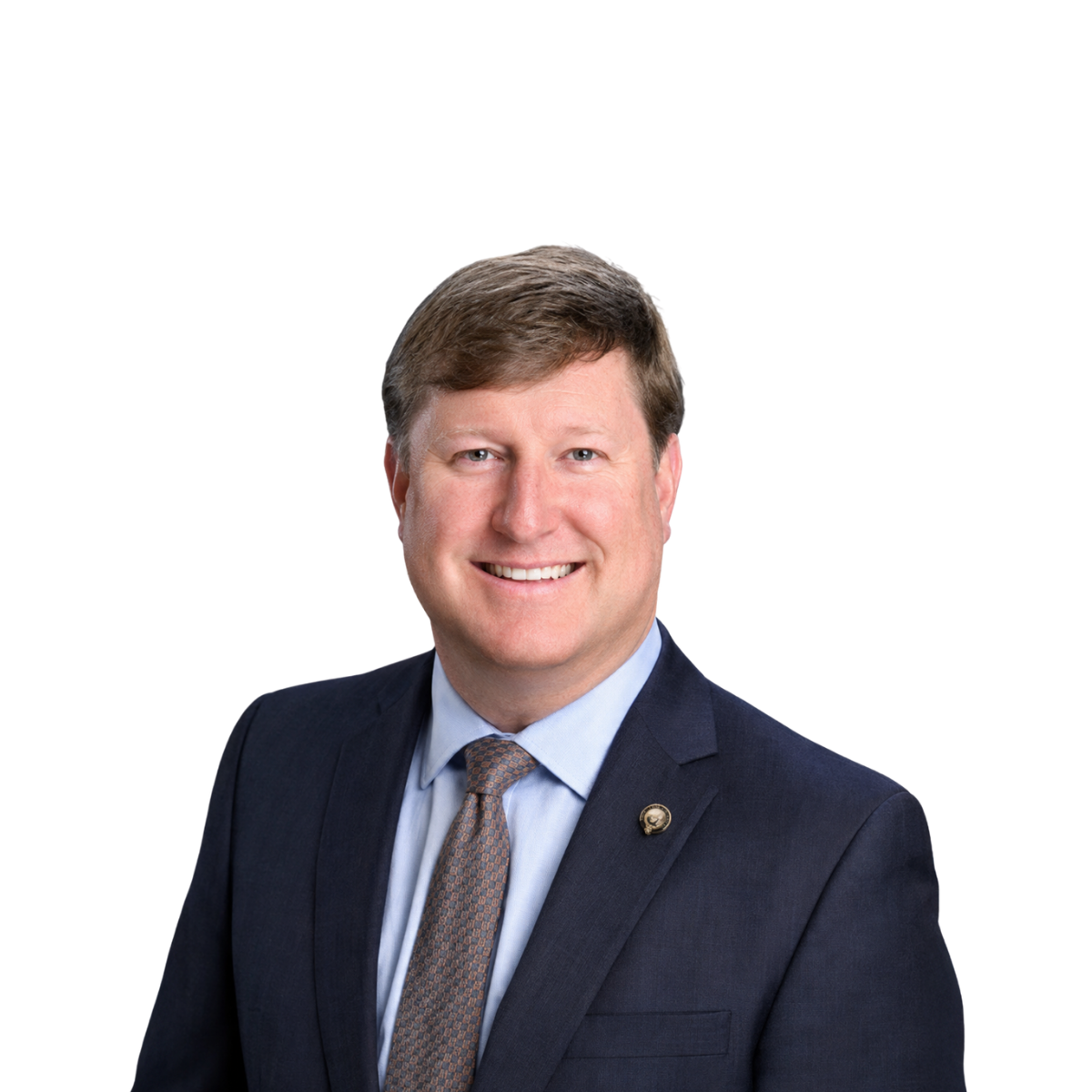

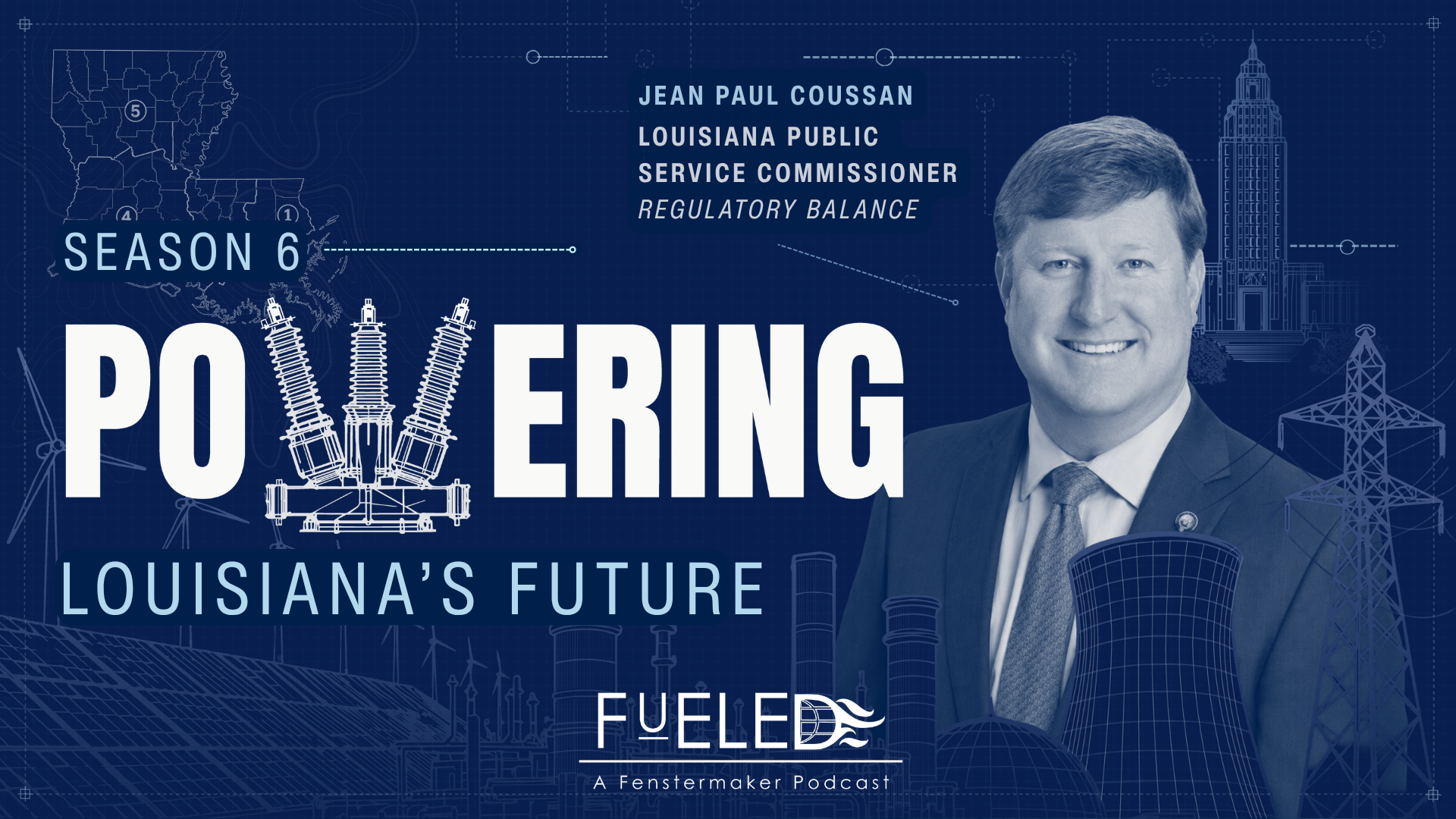
In Episode 6 of FUELED Season 6, Kathryn Fenstermaker sits down with Jean-Paul Coussan, Vice Chairman of the Louisiana Public Service Commission and Commissioner for District 2, to discuss how the Commission approaches some of Louisiana’s most consequential energy decisions.
Coussan begins by explaining the Commission’s broad constitutional authority to regulate utilities and protect the public interest. He also describes the personal side of that responsibility: his district office handles roughly 1,500 constituent complaints each year involving outages, billing questions, and utility service.
That connection to the public shapes Coussan’s approach to policy. Reflecting on the thousands of oil and gas jobs Acadiana once lost, he explains why “jobs, jobs and jobs” remain his priority—and why economic growth should create opportunities for people to remain in Louisiana, raise families, and build wealth in their communities.
The conversation turns to Louisiana’s rapidly rising electricity demand, particularly from major industrial developments and data centers. Coussan explains how the Commission evaluates whether new power infrastructure is necessary while guarding against overbuilding, stranded assets, and costs being passed to existing customers.
One of the episode’s central themes is growth without cost shifting. Coussan argues that large-load customers should carry the costs and risks created by their projects while also producing measurable benefits for the broader system. Using Meta’s Richland Parish development as an example, he discusses customer guarantees, infrastructure contributions, minimum payments, and other protections intended to benefit surrounding communities and the electric grid.
Coussan also explains the “Lightning Amendment,” an accelerated review process designed to help the Commission respond to major economic-development opportunities without lowering its standards. The goal is to move with urgency without surrendering scrutiny.
The discussion also explores long-term energy planning, Louisiana’s “all-of-the-above” approach to generation, and the Commission’s continuing oversight of approved utility investments.
Looking ahead, Coussan defines success as a Louisiana growing in population and opportunity while maintaining nationally competitive electricity rates. At its heart, the episode is about regulation as stewardship: supporting growth without abandoning scrutiny or shifting its risks to the public. Coussan closes by comparing Louisiana’s future to planting oak trees whose full impact may not be seen for decades—a reminder that today’s decisions will shape the state for generations.